

About Gagan Thapa
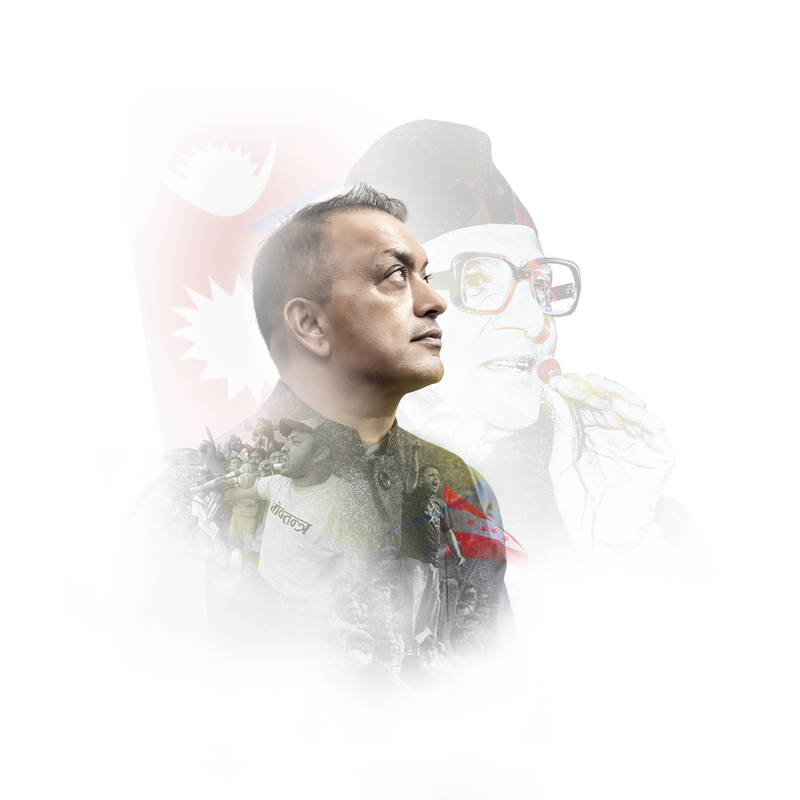
Gagan Thapa was born on July 16, 1976, in Kathmandu as the second son of Mahendra Kumar Thapa and Rameshwori Thapa. His family traces its roots to Solukhumbu district, though they later settled in Kathmandu. Thapa spent part of his childhood in Sindhupalchok and completed his schooling in Kathmandu from Siddhartha Banastali High School.
Thapa’s political awakening began during Nepal’s first People’s Movement in 1990, when he was a ninth-grade student. He later enrolled at Tri-Chandra Campus, where he became active in student politics, and in 1994 was elected to the Free Students' Union. He was first detained in 1994 during student-led protests. Over the following years, he was jailed eight to ten times on charges related to political activism.
By 1998 he had been elected campus union president and took on a more central role in the Nepal Students Union (NSU), the student wing of the Nepali Congress. At NSU, he served as the central vice-president and general secretary from 2002 to 2004. During the early 2000s, Thapa openly called for the abolition of the monarchy, a position that was not yet mainstream within the party.
During King Gyanendra's direct rule, he continued to face arrest on charges of sedition and royal opposition. Thapa played a lead role in the 2006 People’s Movement, which led to the reinstatement of parliament and the eventual abolition of the monarchy.
In 2008, Thapa entered the first Constituent Assembly as a proportional representation member. In 2010, he was elected to the Nepali Congress Central Working Committee at the 12th National Convention with the highest votes among all candidates.
In 2013, he won election from Kathmandu-4 and chaired the Agriculture and Water Resources Committee. He went on to win the same constituency in 2017 and again in 2022 and have secured three consecutive terms in parliament.
Thapa served as Minister for Health from 2016 to 2017. He introduced the national health insurance scheme to expand access to affordable healthcare. He made dialysis and kidney transplant services fully free of cost and expanded dialysis facilities beyond Kathmandu. His ministry broadened access to cardiac surgery and cancer treatment, and initiated liver transplant services within Nepal.
He expanded the Nepali Congress's programme providing free treatment for critical illnesses from eight to twelve diseases. His ministry opened military hospitals to the general public, introduced free neonatal care at Kanti Children's Hospital, extended hospital pharmacies, capped state funds for VIP treatments, and launched nationwide screening programmes for non-communicable diseases and cervical cancer.
Following the promulgation of the constitution in 2015, Thapa launched 'Project Government,' an initiative that brought together around 60 experts including economists, policy experts, and former bureaucrats on a voluntary basis to develop policy frameworks across 16 sectors and 31 subsectors.
In 2021, Thapa was elected General Secretary of the Nepali Congress at the 14th General Convention. In 2026, Thapa was elected President of the Nepali Congress at the Special Convention. Gagan Thapa is one of Nepal's most consequential political leaders and the Nepali Congress's candidate to lead the country as Prime Minister in 2026.